

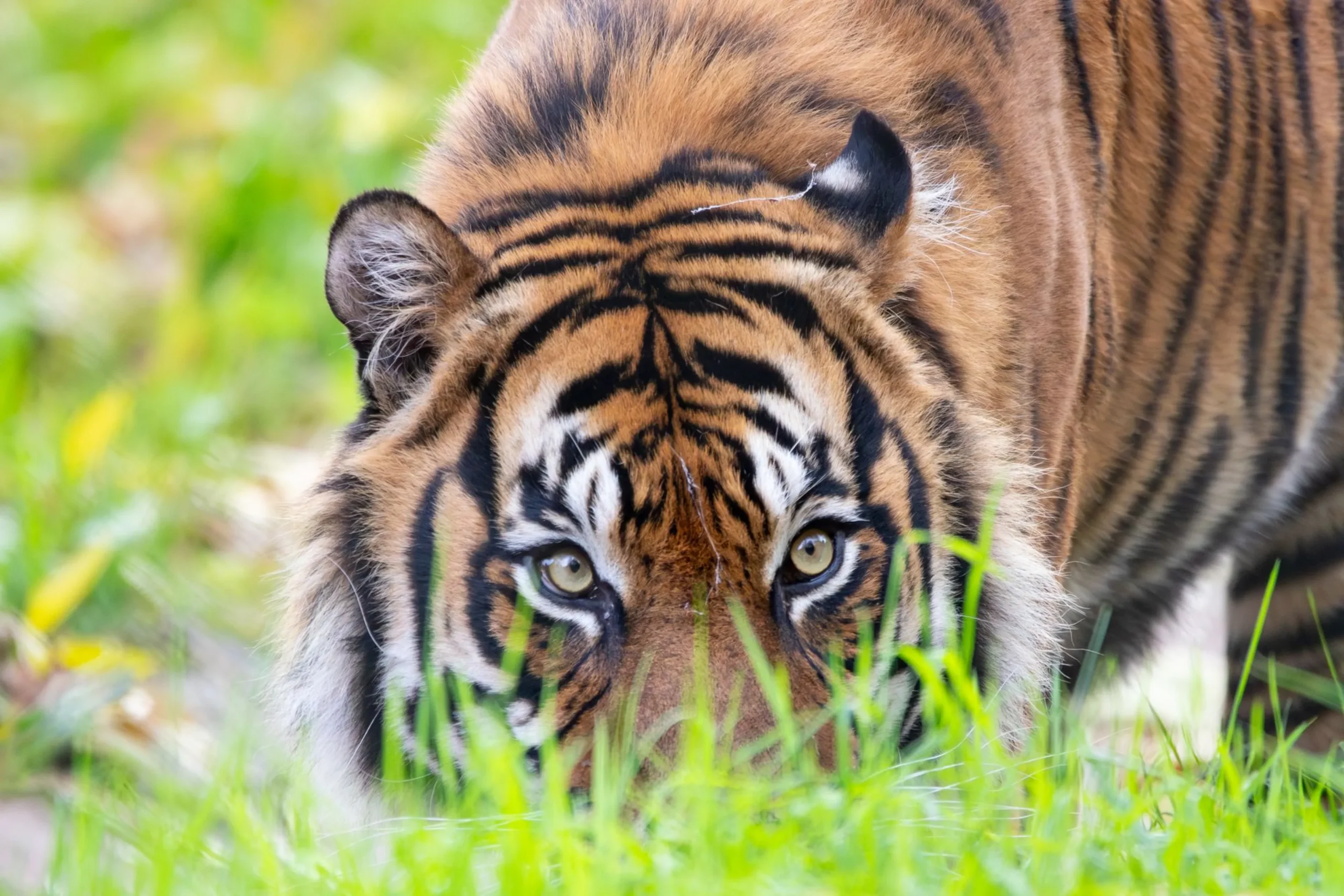
“When a tiger disappears from the forest, the loss extends far beyond a single animal. What disappears with it is an ecological balance that has sustained life for thousands of years.”
Across the remaining forests of Sumatra, a silent guardian still moves through the shadows. It does not plant trees, restore watersheds, or regulate the climate in ways visible to the human eye. Yet its presence influences the health and stability of an entire ecosystem, shaping the lives of countless species that share the same landscape.
That guardian is the Sumatran Tiger.
Today, the Sumatran Tiger (Panthera tigris sumatrae) is the last surviving tiger subspecies in Indonesia. The Bali Tiger has vanished. The Javan Tiger has been declared extinct. What remains is the Sumatran Tiger—the final representative of a lineage that once roamed across the Indonesian archipelago.
Its survival is not merely a conservation concern. It is a measure of the health of some of Southeast Asia’s most important forests and a reflection of humanity’s commitment to safeguarding the natural systems upon which life depends.
Every species plays a role in nature. However, some species exert a disproportionately large influence on the ecosystems they inhabit. The Sumatran Tiger is one of them.
As an apex predator, the tiger occupies the highest position in the food web. It helps regulate populations of prey species such as deer, wild boar, and other herbivorous mammals. This ecological function may appear straightforward, yet its consequences are profound.
Without predators, prey populations can increase beyond the carrying capacity of their habitat. Excessive browsing and grazing pressure can prevent young trees from
maturing, reduce forest regeneration, alter vegetation structure, and ultimately diminish biodiversity.
Ecologists describe this phenomenon as a trophic cascade—a chain reaction that occurs when a top predator is removed from an ecosystem.
In this way, the Sumatran Tiger contributes not only to the survival of individual species but also to the long-term resilience and ecological integrity of entire forest landscapes.
Its presence helps maintain balance. Its absence can reshape ecosystems.
The relationship between tigers and people is often overlooked. Most people will never encounter a wild tiger. Yet millions depend every day on the forests that tigers help protect. The forests of Sumatra serve as vital watersheds, supplying clean water to communities across the island.
They store vast amounts of carbon, helping mitigate climate change. They stabilize soils, reduce the risk of floods and landslides, and support livelihoods through ecosystem services that are often taken for granted. The presence of tigers is one of the strongest indicators that these ecological functions remain intact.
Tigers require extensive habitat, sufficient prey populations, and relatively undisturbed ecosystems to survive. Where tigers persist, many of the ecological processes necessary to sustain biodiversity and environmental stability are still functioning.
For this reason, conservation scientists often refer to tigers as an umbrella species. Protecting a tiger means protecting the landscape it depends upon. Protecting that landscape means safeguarding thousands of plant and animal species, as well as the natural resources upon which human societies depend.
Despite their ecological importance, Sumatran Tigers continue to face significant threats from human activities. Poaching remains one of the most immediate dangers.
Tigers are killed for their skins, bones, teeth, claws, whiskers, and other body parts, many of which continue to command high prices in illegal wildlife markets. What is often overlooked is a simple reality: Every tiger product originates from a dead tiger.
There is no sustainable way to remove a tiger’s skin, teeth, or bones from a living wild animal. Behind every skin displayed as a trophy, every claw worn as jewelry, and every bone sold into illegal markets lies the loss of an individual whose ecological value far exceeds any monetary price.
In a population already under pressure, every tiger matters. Every loss weakens the species’ ability to recover. And every poaching incident diminishes the resilience of the ecosystem that tigers helped sustain.
The illegal trade in tiger parts is often framed as a conservation issue. In reality, it is also a law enforcement, governance, and security issue. Wildlife trafficking ranks among the world’s most lucrative forms of transnational organized crime.
Networks involved in tiger trafficking are frequently linked to broader criminal activities, including smuggling, corruption, document fraud, money laundering, and organized criminal enterprises operating across international borders. Allowing tiger trafficking to continue does not simply threaten a species.
It strengthens criminal networks, undermines conservation investments, weakens governance systems, and erodes public trust in environmental protection efforts. Ending the trade in tiger parts is therefore about more than saving wildlife.
It is about defending the rule of law and protecting the integrity of conservation itself.
Today, Sumatran Tigers still survive. They continue to move through forests that have sheltered them for millennia. They continue to leave their tracks in the soil and their presence across the landscape.
Yet their future is no longer determined solely by nature. It is determined by human choices. The choice to protect forests or destroy them. The choice to combat wildlife trafficking or tolerate it. The choice to invest in conservation or allow extinction to unfold.
One day, future generations may ask:
“When the Sumatran Tiger still had a chance to survive, what did you do?”
The answer to that question is being written today. Because saving the Sumatran Tiger is not simply about preventing the loss of a species. It is about protecting the forests that provide clean water.
Protecting ecosystems that regulate climate. Protecting biodiversity that has evolved over millions of years. And ultimately, protecting a future in which both people and wildlife can thrive.
If the Sumatran Tiger disappears, we lose more than Indonesia’s last tiger. We lose one of nature’s most powerful guardians of ecological balance. And we lose part of the living world that sustains us all.

Article supported by:
The Wildlife Whisperer of Sumatra | #EXTINCTIONISNOTANOPTION