

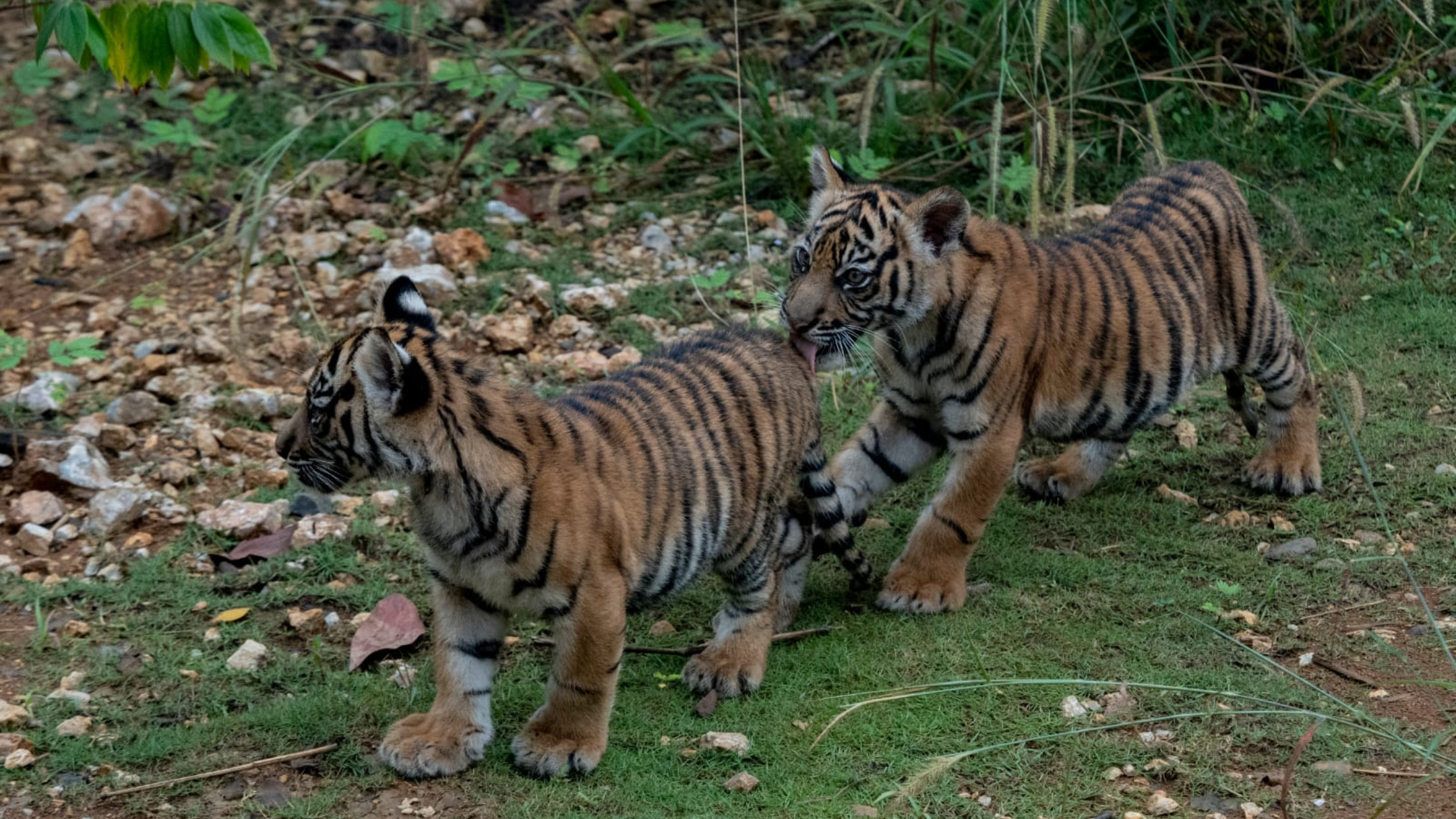
“Every tiger that arrives at the sanctuary carries a different past. Yet each one is prepared with the same hope—to one day return to where it truly belongs: the forest.”
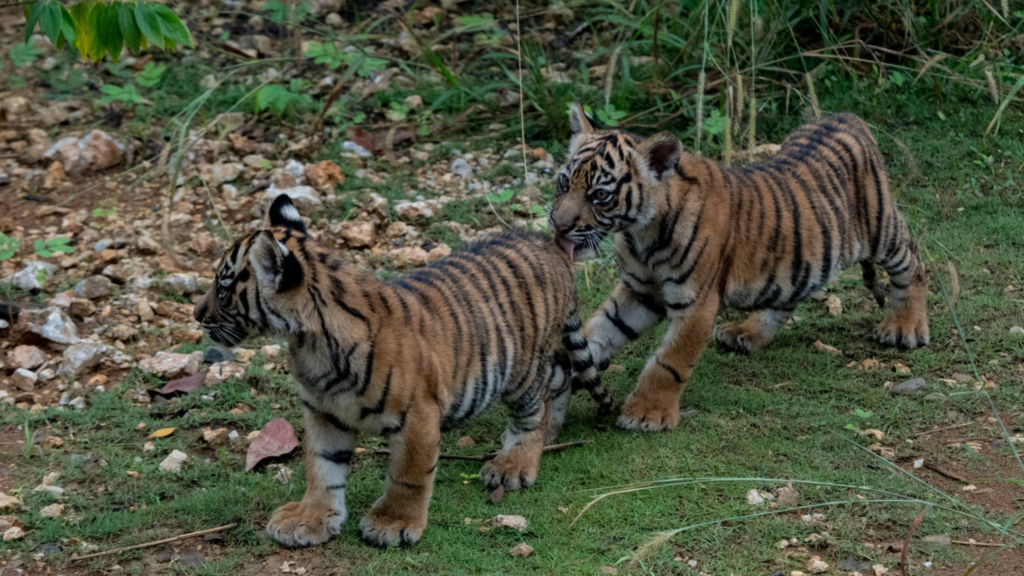 [Memory of Citra Kartini & Surya Manggala at Barumun Sanctuary]
Conservation is often defined by measurable milestones: the number of animals rescued, rehabilitated, or successfully returned to the wild. These achievements matter, and they are frequently used to measure progress.
Yet some of conservation’s greatest accomplishments can never be expressed in numbers. They are found in hope. In trust. And in the lessons that continue to shape the future long after a journey has come to an end.
For the Barumun Sumatran Tiger Sanctuary, two names have become inseparable from those lessons: Citra Kartini and Surya Manggala.
Their story extends far beyond the history of a single sanctuary. It has become part of Indonesia’s broader conservation journey, reminding us that returning a tiger to the forest is never the end of conservation. Rather, it marks the beginning of an entirely new chapter—one shaped not by human intervention, but by the realities of the wild.
A Hope Born in Barumun
In December 2018, the Barumun Sumatran Tiger Sanctuary welcomed the birth of two Sumatran tiger cubs, Citra Kartini and Surya Manggala. They were born to Gadis and Monang, two tigers rescued from human-wildlife conflict whose injuries made a return to the wild impossible.
For Barumun, their birth represented far more than the arrival of two cubs. It symbolised continuity. While one generation had lost the opportunity to live freely in the forest, another was being given the chance to reclaim it. Their arrival offered a rare reminder that conservation is not only about preventing extinction, it is also about creating opportunities for recovery.
From its inception, the Barumun Sumatran Tiger Sanctuary was never intended to become a permanent home for wildlife. It was established as a place of recovery. A place where displaced tigers could heal, regain their natural behaviours, and, whenever possible, prepare for life beyond human care.
Every aspect of the rehabilitation programme reflects a single philosophy: the ultimate goal of conservation is not lifelong protection under human supervision, but enabling wildlife to resume its ecological role in nature. For a tiger, the forest is not simply a habitat.
It is where the species belongs.
Three and a Half Years Preparing for a Return
For more than three and a half years, Citra Kartini and Surya Manggala underwent an intensive rehabilitation programme designed to prepare them for one objective: survival in the wild. Tiger rehabilitation is often misunderstood.
To many people, it means ensuring an animal is healthy enough to leave captivity. In reality, it is a far more complex process. Every decision—from husbandry practices to behavioural monitoring is intended to preserve the qualities that define a wild tiger. Human interaction was deliberately kept to an absolute minimum.
The cubs remained with their mother throughout their early development, while opportunities to hunt live prey helped reinforce their natural predatory instincts. Their behaviour was continuously monitored through routine observations and remote surveillance, allowing animal care teams to assess their readiness without encouraging dependence on people.
As they matured, comprehensive veterinary examinations confirmed that both tigers were physically fit for release. GPS satellite collars were also fitted to enable post-release monitoring, providing valuable information on movement, habitat use, and survival after returning to the forest.
The objective was never to raise tigers accustomed to human presence. Quite the opposite. Every stage of rehabilitation was designed to ensure they remained unmistakably wild. Because a tiger that survives in the forest must rely not on people, but on instinct.
The Day They Returned to the Forest
After years of preparation, one of the sanctuary’s most significant milestones finally arrived. On Tuesday, 7 June 2022, Surya Manggala began his journey home.
Transported more than 636 kilometres from Barumun to Kerinci, he was flown by helicopter into the core zone of Kerinci Seblat National Park, where he was successfully released into one of Southeast Asia’s most important remaining landscapes for Sumatran tigers. The release formed part of Indonesia’s commemoration of World Environment Day.
Citra Kartini was scheduled to follow on the same day. Nature, however, had other plans. Heavy rain and dense fog prevented helicopters from safely reaching the release site, forcing conservation teams to postpone the operation.
The following morning, Wednesday, 8 June 2022, weather conditions finally improved. Citra Kartini was flown into a separate release site within the park, carefully selected to minimise the risk of inbreeding while allowing both tigers sufficient space to establish independent territories.
For Barumun, these releases represented far more than the completion of a rehabilitation programme. They embodied years of scientific planning, veterinary care, behavioural assessment, and unwavering commitment. Most importantly, they reflected a fundamental belief that every tiger capable of returning to the wild deserves that opportunity.
From that moment onward, the story of Citra Kartini and Surya Manggala no longer belonged solely to the sanctuary. Their future would be shaped by the forest itself with all the opportunities, uncertainties, and challenges that define life in the wild. And perhaps that is the greatest act of faith in conservation.
There comes a moment when science, preparation, and dedication have done all they can. Everything that follows belongs to nature.
Every reintroduction into the wild begins with hope. It is the culmination of years of planning, careful assessment, veterinary care, behavioural rehabilitation, and collaboration among conservation practitioners, government agencies, researchers, and protected area managers.
Yet no matter how thorough the preparation, the moment a tiger disappears into the forest, conservation enters a new phase, one where nature becomes the ultimate decision-maker. The wild offers no guarantees. It never has. Only weeks after her release, that reality unfolded.
On 19 July 2022, approximately six weeks after returning to Kerinci Seblat National Park, Citra Kartini was found dead during routine post-release monitoring. A necropsy conducted by the veterinary team found no evidence of poaching or snaring—two of the most common threats faced by Sumatran tigers. Instead, the injuries suggested that her death was likely associated with an encounter during hunting or a confrontation with prey.
The finding came as a profound disappointment for everyone who had followed her journey from birth. For the dedicated teams who had spent years preparing her for life in the wild, the news was deeply heartbreaking. Yet it also reflected an uncomfortable truth that conservation has always understood.
Returning wildlife to its natural habitat does not eliminate risk. It restores it.
Life in the wild demands decisions that no human can make on an animal’s behalf. Every hunt carries uncertainty. Every territorial encounter has consequences. Every day becomes a balance between survival and the countless challenges that define a functioning ecosystem.
The forest had accepted Citra Kartini back. But it also subjected her to the same realities faced by every wild tiger. Her passing quickly became national news. Environmental media, conservation organisations, academics, and members of the public expressed their sorrow while also asking difficult but necessary questions.
Could post-release monitoring be strengthened further? How should habitat readiness be evaluated? What additional knowledge could improve future reintroductions? These were not questions born from criticism alone.
They reflected something equally important,–a growing public appreciation that wildlife conservation is a long-term scientific process rather than a series of symbolic releases. Citra Kartini’s story encouraged broader conversations about adaptive conservation, an approach that embraces continuous learning, evaluation, and improvement rather than assuming every outcome will unfold exactly as planned.
In that sense, her journey extended well beyond her own life. It became part of a larger body of knowledge that will continue to inform future conservation efforts.
Another Farewell
Months later, Barumun faced another painful chapter. On 1 March 2023, the GPS collar worn by Surya Manggala indicated no further movement. A field team was immediately deployed to investigate. By the time they reached the remote location, only skeletal remains and the satellite collar remained. The advanced stage of decomposition meant that the exact cause of death could no longer be determined.
Once again, conservationists were confronted by the limits of certainty. Not every question can be answered. Not every outcome can be fully understood. In the wild, evidence disappears quickly, carried away by weather, scavengers, and the relentless processes of nature itself.
The news of Surya Manggala’s death echoed across Indonesia’s conservation community. For many who had celebrated his release less than a year earlier, the loss was difficult to accept. Yet the response that followed demonstrated something remarkable. Rather than diminishing support for tiger conservation, the stories of Citra Kartini and Surya Manggala deepened public understanding of what conservation truly entails.
Many people began to recognise that successful conservation cannot be measured solely by survival statistics. It must also be measured by what each experience contributes to future decisions. Every release provides new ecological data. Every monitored movement improves scientific understanding. Every challenge reveals opportunities to refine rehabilitation protocols, strengthen post-release monitoring, and better understand the landscapes into which animals are returned.
That is how conservation evolves. Not by avoiding failure. But by learning from every outcome.
Beyond Two Individual Tigers
It would be easy to remember Citra Kartini and Surya Manggala simply as two tigers whose lives ended too soon. But doing so would overlook the significance of what they left behind. Their story is not defined by loss. It is defined by contribution.
They helped expand our understanding of post-release ecology. They reinforced the importance of long-term monitoring. They highlighted the complexity of restoring large carnivores to fragmented landscapes. And perhaps most importantly, they reminded us that conservation does not end when an animal walks back into the forest.
In many ways, that is precisely where conservation begins. Because reintroducing a tiger is never just about preparing the individual. It is equally about preparing the landscape. A healthy tiger population depends on healthy forests. Healthy forests depend on connected habitats.
Connected habitats depend on effective protection, sustainable land management, thriving prey populations, and communities that coexist with wildlife. Without these elements, even the best rehabilitation programme cannot guarantee success.
Citra Kartini and Surya Manggala reminded us that returning a tiger to the wild is only one chapter in a much larger conservation story. The chapters that follow belong to the forest and to all those committed to protecting it.
Conservation Is a Commitment to Learning
Conservation is often perceived through its milestones—the rescue of an injured animal, the birth of a new generation, or the successful return of wildlife to its natural habitat. Yet those who work closest to nature understand that conservation has never been about certainty.
It is about responsibility. Every rescued tiger carries a different history. Every rehabilitation programme presents unique challenges. Every release into the wild marks the beginning of a journey whose outcome can never be fully predicted. This uncertainty does not diminish the value of conservation. It defines it.
For the Barumun Sumatran Tiger Sanctuary, the journeys of Citra Kartini and Surya Manggala have become an enduring reminder that meaningful conservation requires more than compassion. It demands scientific rigour, long-term commitment, and the humility to acknowledge that nature will always remain beyond complete human control.
Every rehabilitation protocol is refined. Every improvement in post-release monitoring. Every discussion about habitat readiness. Every collaboration between government agencies, conservation organisations, researchers, veterinarians, field teams, and local communities.
Each represents another step towards improving the future for the next tiger entrusted to our care. Because conservation is not measured only by the outcomes we celebrate. It is equally measured by our willingness to learn from the outcomes we never hoped to face.
A Legacy That Lives On
The legacy of Citra Kartini and Surya Manggala cannot be measured by the length of time they spent in the wild. Nor can it be defined solely by the circumstances surrounding their deaths. Their legacy lies elsewhere. It lives in every lesson they made possible.
It lives in every improvement inspired by their journey. It lives in every decision informed by the knowledge they helped create.
Today, the Barumun Sumatran Tiger Sanctuary continues its mission with the same purpose that has guided it from the beginning—to provide rescued Sumatran tigers with the opportunity to recover, to remain wild, and, whenever possible, to return to the forests where they belong.
Each tiger that arrives at the sanctuary carries its own story. Some will remain under lifelong human care because returning to the wild is no longer possible. Others may one day leave through the sanctuary gates and disappear into the forests of Sumatra.
When that day comes, they will carry with them far more than the result of months or years of rehabilitation. They will carry the knowledge gained from those who came before them. They will carry the experience gathered through countless hours of observation, research, and reflection.
And they will carry the quiet legacy of two tigers whose journey continues to shape the future of conservation.
For Every Tiger Yet to Return Home
The story of Citra Kartini and Surya Manggala is not ultimately a story about loss. It is a story about purpose.
Their journey reminds us that returning a tiger to the wild is never the final destination. It is a promise—a promise that every release must be supported by stronger science, healthier forests, more resilient ecosystems, and an unwavering commitment to learning.
Their footprints may have faded from the forest floor. But the path they opened remains. It is reflected in every improvement made to rehabilitation practices. In every refinement of post-release monitoring. In every effort to safeguard the forests that sustain Indonesia’s remaining Sumatran tigers.
And in every decision driven by one shared belief: that every tiger deserves not only the chance to return to the wild, but the chance to thrive there.
As long as Sumatra’s forests continue to be protected, restored, and valued as living ecosystems not only for tigers, but for all life that depends on them, the legacy of Citra Kartini and Surya Manggala will endure.
Not only in the history of the Barumun Sumatran Tiger Sanctuary. Not only in scientific reports or conservation records. But in every future tiger that takes its first steps back into the forest.
Because some lives leave behind more than memories.
They leave behind a responsibility. A responsibility to keep learning. To keep improving. And to ensure that every tiger entrusted to our care is given the greatest possible chance to reclaim its place in the wild.

Article supported by:
The Wildlife Whisperer of Sumatra | #EXTINCTIONISNOTANOPTION